Your baby is about to start crawling, and the question quietly nagging at you is a fair one: is my home safe for baby? The honest answer for most homes is “not quite yet.” The good news is that the warning signs are easy to spot once you know what to look for — and easy to fix.
Start with the floor-level test
Here's the quickest way to see your home the way your baby will. Get down on your hands and knees in each room and look around from that height. Suddenly you'll notice the things a standing adult never sees: the gap under the sofa, the dangling charger cable, the sharp table corner right at head height, the coin that rolled under the cabinet. If it's within your baby's reach down there, it's within their world.
Do this slowly, room by room, and take a photo on your phone of anything that catches your eye. You'll end up with a short, specific to-do list rather than a vague feeling that “the house needs baby-proofing” — and a clear list is far easier to act on.
The warning signs: a quick self-audit
Go room by room and ask yourself — if you answer “yes” to any of these, your home isn't ready yet.
- Are wall sockets and power boards left open and uncovered?
- Are there sharp edges and corners at your baby's height on tables, beds and units?
- Are loose wires, charger cables or extension boards lying within reach?
- Are cabinets and drawers — especially in the kitchen — unlocked?
- Are small objects (coins, buttons, caps, older siblings' toys) reachable on the floor or low surfaces?
- Is any furniture wobbly or top-heavy enough to tip if pulled?
- Are stairs or the balcony open and un-gated?
- Are buckets, tubs or vessels of water left standing and unattended?
Most homes tick at least three or four of these boxes. That's completely normal — it just means there's a short to-do list before the crawling begins.
Match each warning sign to its fix
Every hazard on that list has a simple, affordable solution — you rarely need to rebuild or renovate anything. Here's what handles each one:
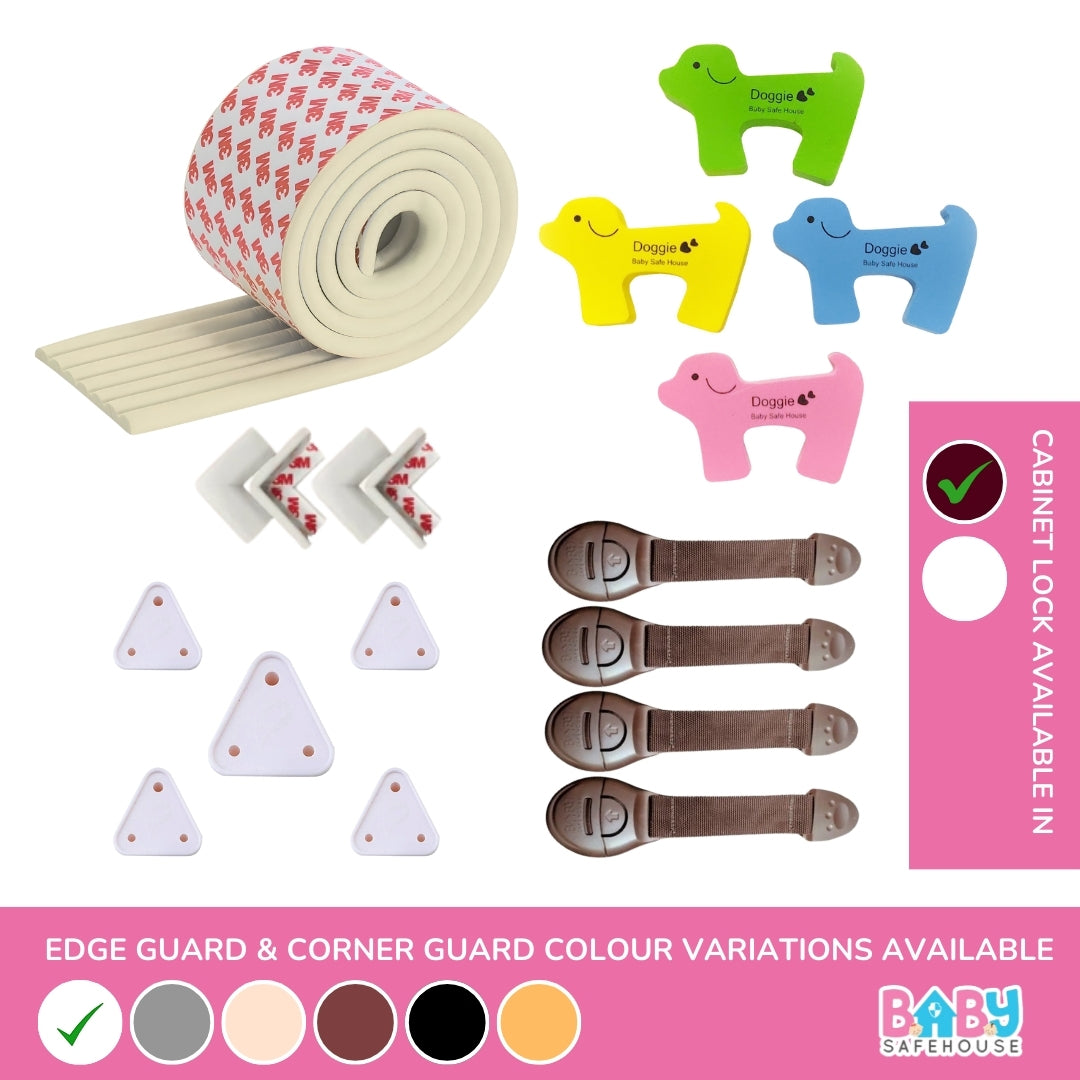
- Open sockets — socket covers on every point.
-
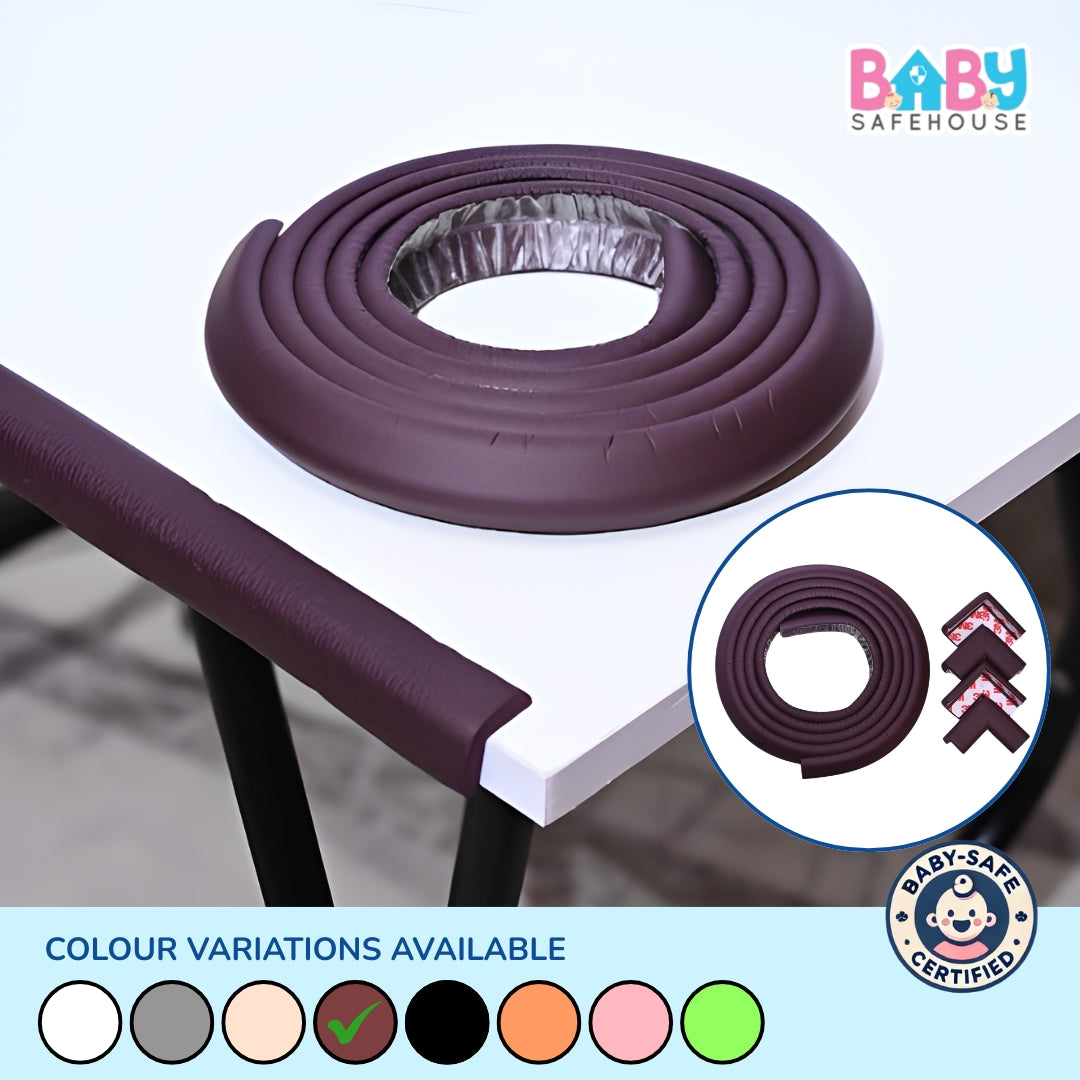
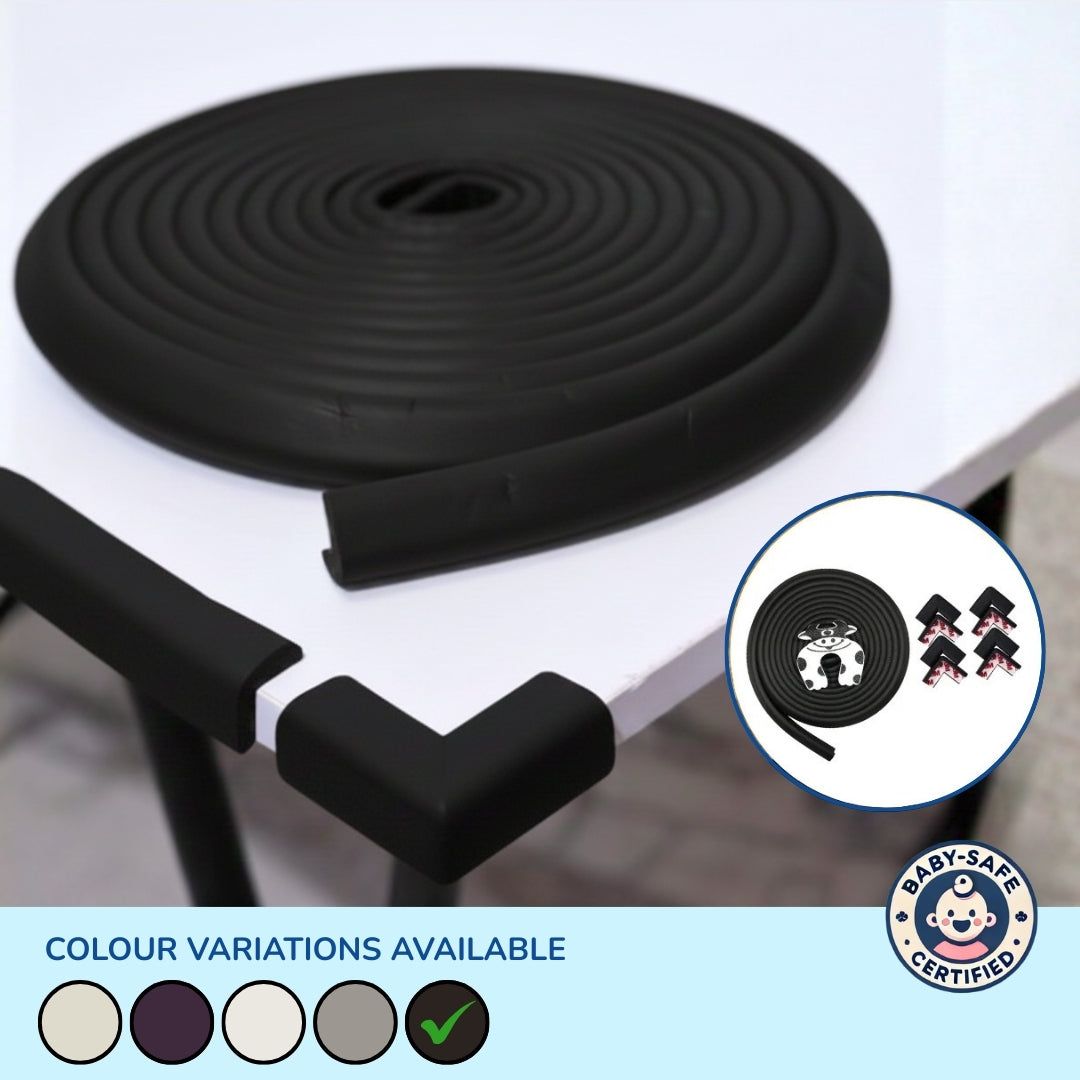
Sharp edges and corners — an edge guard and corner protector combo.
- Loose wires — route, bundle and secure them out of reach.
- Unlocked cabinets and drawers — clip-on cabinet locks.
- Small objects — a daily floor sweep and a clear-the-floor habit.
- Tippable furniture — anchor it to the wall.
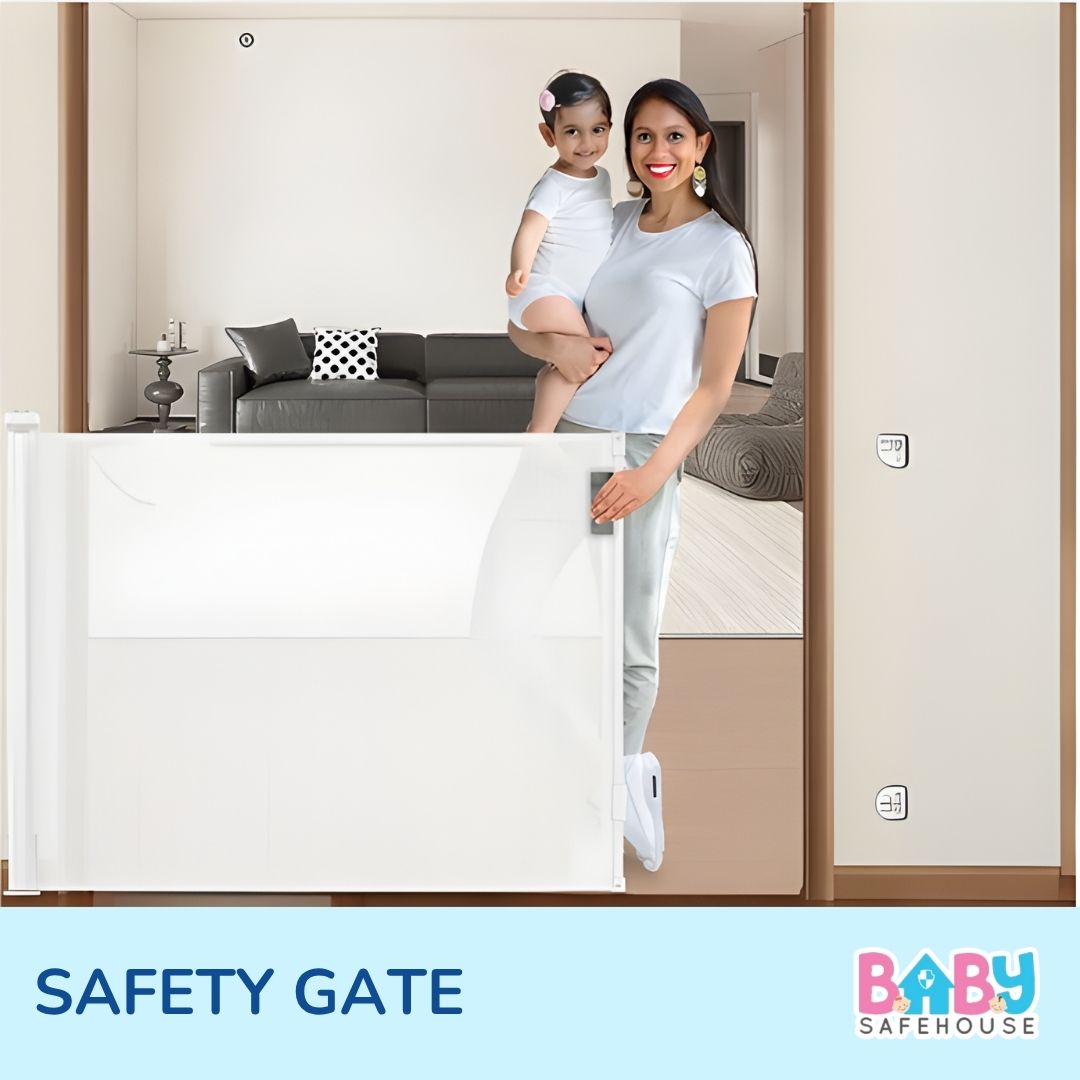
- Open stairs and balcony — a securely-mounted safety gate and balcony netting.
- Standing water — empty buckets and tubs immediately.
It's normal to miss a few things
If your list felt long, don't be hard on yourself — no home is born baby-ready, and even safety-conscious parents miss things on the first pass. The point of the floor-level test isn't to make you anxious; it's to swap guesswork for a clear, finite list you can work through in an afternoon. Tackle the fall and electrical hazards first, then the rest.
Re-check as your baby grows
A home that's safe for a crawler isn't automatically safe for a stander or a climber. As your baby pulls up to furniture, reaches higher surfaces and works out how latches open, new hazards appear. Repeat the floor-level test every couple of months and after any big change — new furniture, a house move, or a festival when décor and extra wires come out.
Why you should fix it before, not after
Here's the trap many parents fall into: they plan to baby-proof “when the baby starts moving.” But babies become mobile suddenly, often overnight, and a baby who couldn't reach the socket yesterday can be at it today. Proofing before your baby crawls means you're preventing accidents instead of scrambling to react to them. Foresight, not fear.
The fastest way to tick most boxes
If your self-audit turned up the usual suspects — open sockets, sharp corners, unlocked cabinets — a Safety Starter Combo clears the most common hazards in one purchase. Start there, then add stair gates, balcony nets and anchors for anything specific to your home. Run the floor-level test once more afterwards, and you'll feel the difference: a home that's genuinely ready for your little explorer.