How to Baby Proof an Indian Kitchen Without Losing Functionality
The kitchen is the busiest and most chaotic space in most Indian homes. From pressure cookers to masala boxes, from gas burners to heavy steel utensils everything catches a baby’s attention. That’s why understanding how to baby proof an Indian kitchen is essential, especially when you want to keep the space functional for everyday cooking. This guide breaks down practical, India-specific methods that protect curious toddlers without disrupting your routine.
Why Baby Proofing an Indian Kitchen Needs a Different Approach
Indian kitchens are dense with activities- tempering spices, boiling milk, handling hot oil, and storing multiple appliances. A third-person perspective reveals an interesting insight: parents don’t struggle because they lack safety tools; they struggle because they fear losing efficiency. The goal is not to convert the kitchen into a “no-touch zone,” but to create a layout where the baby can wander without encountering hazards.
1. Start With the Basics: Assess the High-Risk Spots
Before making changes, do a quick walkthrough and identify:
- Hot surfaces (gas stove, induction, tawa, cooker)
- Low cabinets storing detergents, spices, oils, or glass jars
- Sharp tools (knives, peelers, graters)
- Appliances kept on open counters
-
Heavy utensils like pressure cookers and kadais
Understanding your risky zones helps you decide which baby proofing steps matter the most.
2. Secure Low Cabinets Without Blocking Daily Use
Use Magnetic or Adhesive Safety Locks
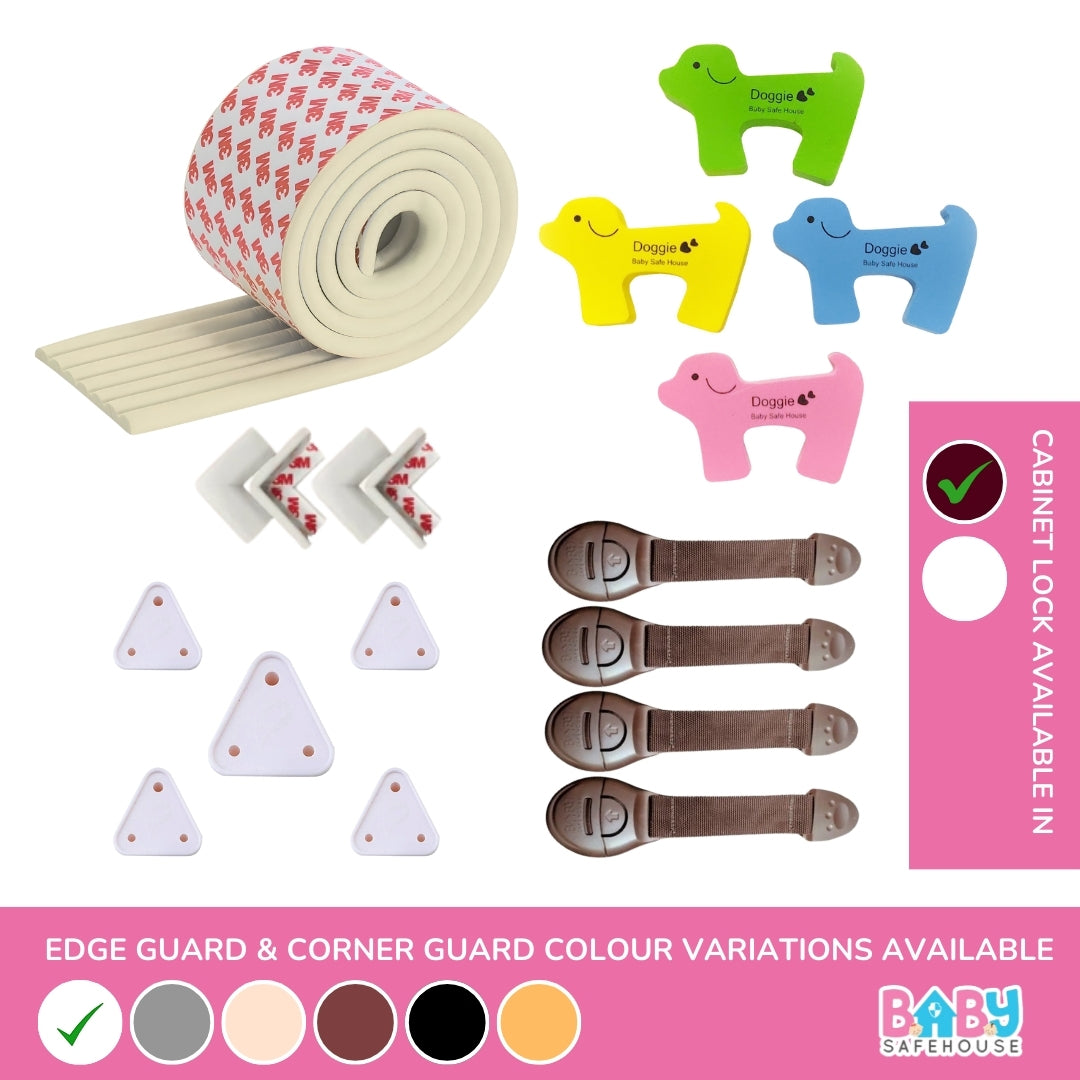
Most Indian kitchens have low cabinets filled with groceries, dishes, or cleaning items. Installing magnetic locks keeps the doors shut yet opens easily for adults.
Why it works:
- No drilling required
- Invisible from outside
-
You can still access everything quickly
Shift Dangerous Items to Higher Shelves
Detergents, phenyl, knives, spices, and oils should be moved out of the baby’s reach.
Keep One “Safe Drawer” Accessible
Store plastic bowls or soft kitchen towels here. It keeps the child engaged while you cook, reducing their curiosity about other drawers.
3. Stove Area Safety: The Most Critical Zone
-
Install Stove Guards/Knob Covers or Shields
Stove guards prevent toddlers from touching hot vessels or turning knobs.
-
Use Back Burners Whenever Possible
Especially while boiling milk, deep frying, or using pressure cookers.
-
Turn Pot Handles Inwards
Simple but often forgotten outward-facing handles are easy for babies to grab.
-
Never Leave the Kitchen Unattended While Cooking
Even a 30-second absence can be unsafe.
4. Make the Countertop Safer Without Losing Workspace
Indian countertops stay crowded with mixers, cookers, oil jars, roti boxes, and ongoing prep items.
You can retain that functionality by:
- Keeping knives on a wall-mounted magnetic strip (high level)
- Moving hot items directly to upper shelves instead of leaving them on counters
- Using anti-skid mats for jars to prevent sudden slips
-
Managing appliance cables with stick-on clips
A tidy countertop is not only safer but also more efficient for daily cooking.
5. Lock Up Appliances That Babies Love to Touch
Appliances to Baby Proof:
- Microwave
- Mixer grinder
- OTG
- Dishwasher
-
Water purifier with easy buttons
What You Can Do:
- Add appliance-locking straps
- Keep appliances unplugged when not in use
- Push appliances to the back of the counter
-
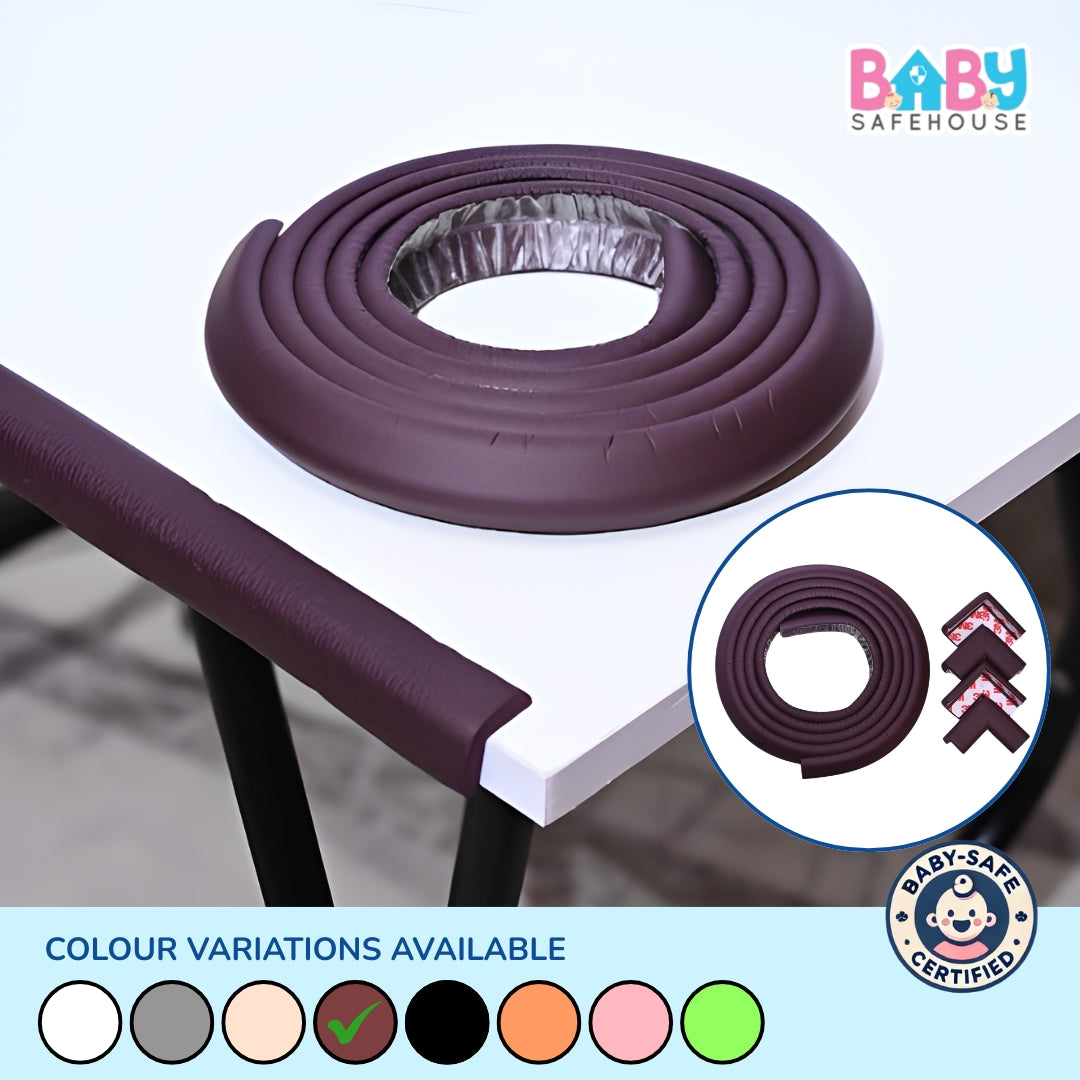
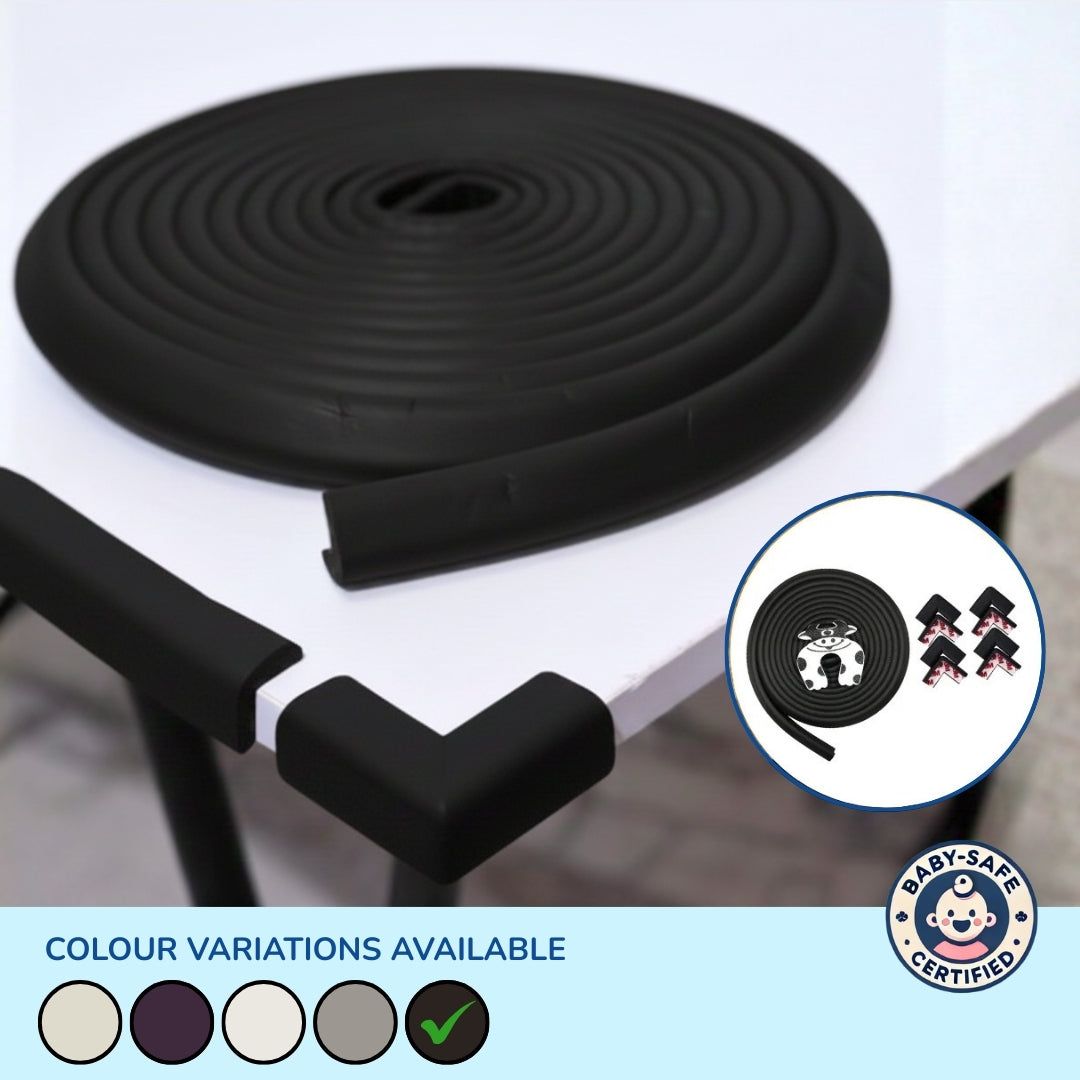
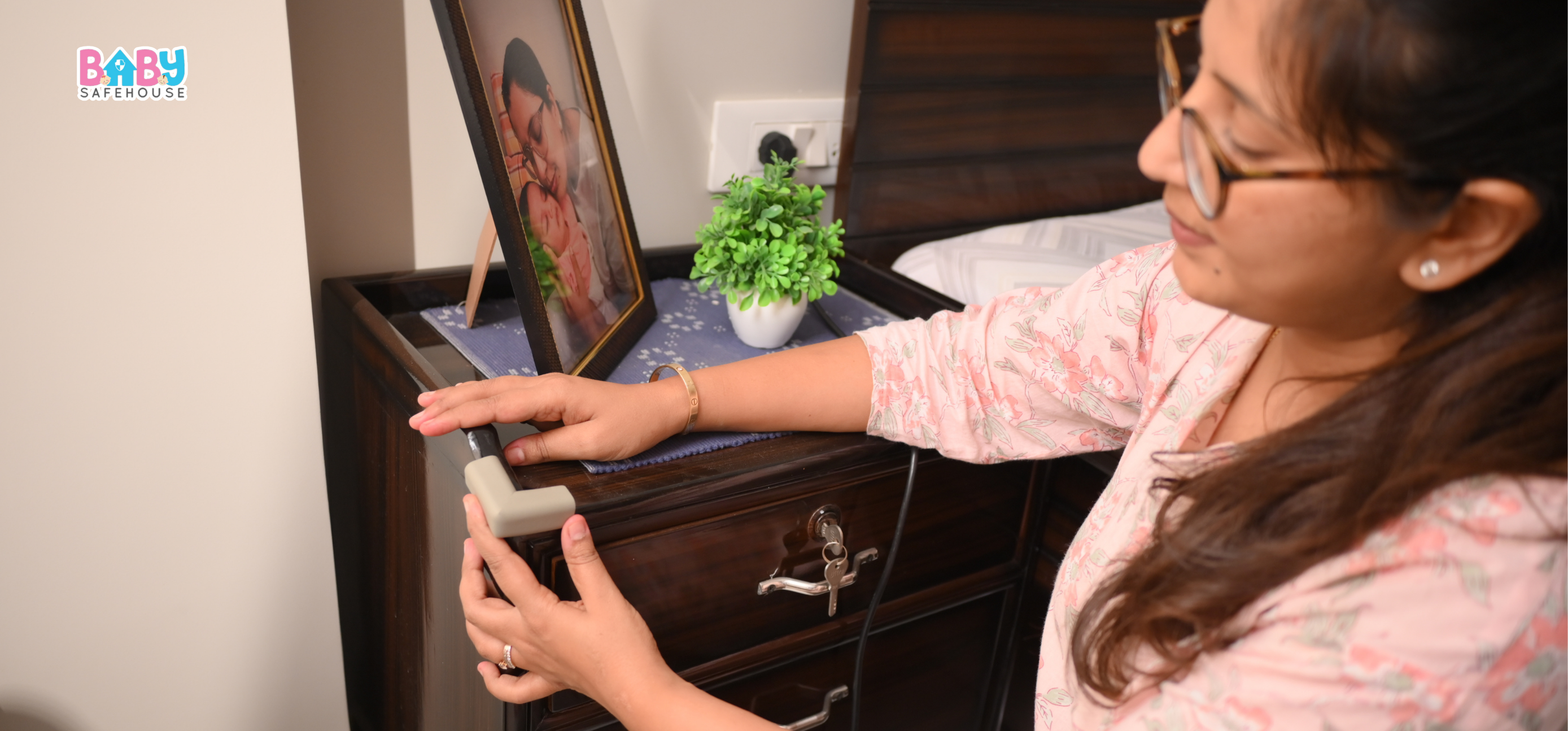
Use transparent corner guards around sharp edges
6. Secure the Refrigerator Without Restricting Use
Babies love refrigerators, lights, the magnets, everything!
Practical Tips:
- Use a simple latch to lock the fridge door
- Avoid storing medicines and alcohol in lower racks
-
Place magnets higher to avoid choking hazards
This way, the fridge stays fully functional while being safe.
7. Manage Heavy Utensils and Steelware Smartly
Indian households use heavy vessels, pressure cookers, idli steamers, big kadais, cooker tops, and stainless steel dabbas.
What to Move to Higher Cabinets:
- Pressure cooker
- Cast iron cookware
- Ceramic or glass pots
-
Big oil containers
What You Can Keep Below (Safe Items):
- Plastic bowls
- Steel plates
- Lids
-
Small tiffins
This helps keep functionality intact since the items you frequently use stay where you want them.
8. Floor-Level Safety: Slips, Spills & Wires
Most accidents in kitchens happen at floor level.
Reduce Risks By:
- Cleaning oil or water spills immediately
- Using anti-skid tiles or mats
- Keeping grocery bags off the floor
-
Hiding appliance wires through cable clips
9. Keep the Gas Cylinder Area Completely Off-Limits
Since many Indian kitchens still use LPG cylinders:
- Use a cylinder cabinet with a latch
- Ensure the gas pipe is not within reach
-
Avoid placing heavy items on top of the cylinder
10. Create a “Safe Zone” So Kids Feel Included
Indian toddlers follow their parents everywhere, especially into the kitchen.
To avoid that constant tug-of-war, create a small safe space in or near the kitchen:
- A play mat
- A basket with soft toys
-
A drawer with spoons or cups they can pull out safely
This keeps them engaged while you cook peacefully.
FAQs About Baby Proofing an Indian Kitchen
1. When should parents start baby proofing the kitchen?
Ideally when the baby starts crawling usually between 6–8 months.
2. What are the most dangerous items in an Indian kitchen?
Gas stove, hot oil, sharp tools, glass jars, detergents, appliances, and heavy cookware.
3. Can baby proofing affect kitchen workflow?
Not if done strategically. Using magnetic locks and shifting only dangerous items ensures you maintain full functionality.
4. Do Indian homes need professional baby proofing services?
Not always. Many precautions can be DIY, but professionals help if the kitchen layout is complex or heavily loaded.
5. Are stove guards/ knob covers necessary for Indian cooking?
Yes, especially with pressure cooking and deep frying, which are common in Indian households.
Conclusion
A well-designed baby proofing setup doesn’t restrict cooking; it enhances safety without disturbing your routine. When parents understand how to baby proof an Indian kitchen in a practical, India-specific way, the kitchen remains efficient, functional, and safe for curious toddlers. If you want expert help with customized safety solutions tailored to your home, BabySafeHouse offers reliable, modern, and child-friendly baby proofing options designed for Indian households.